
Stories behind the change ┃ The Phone
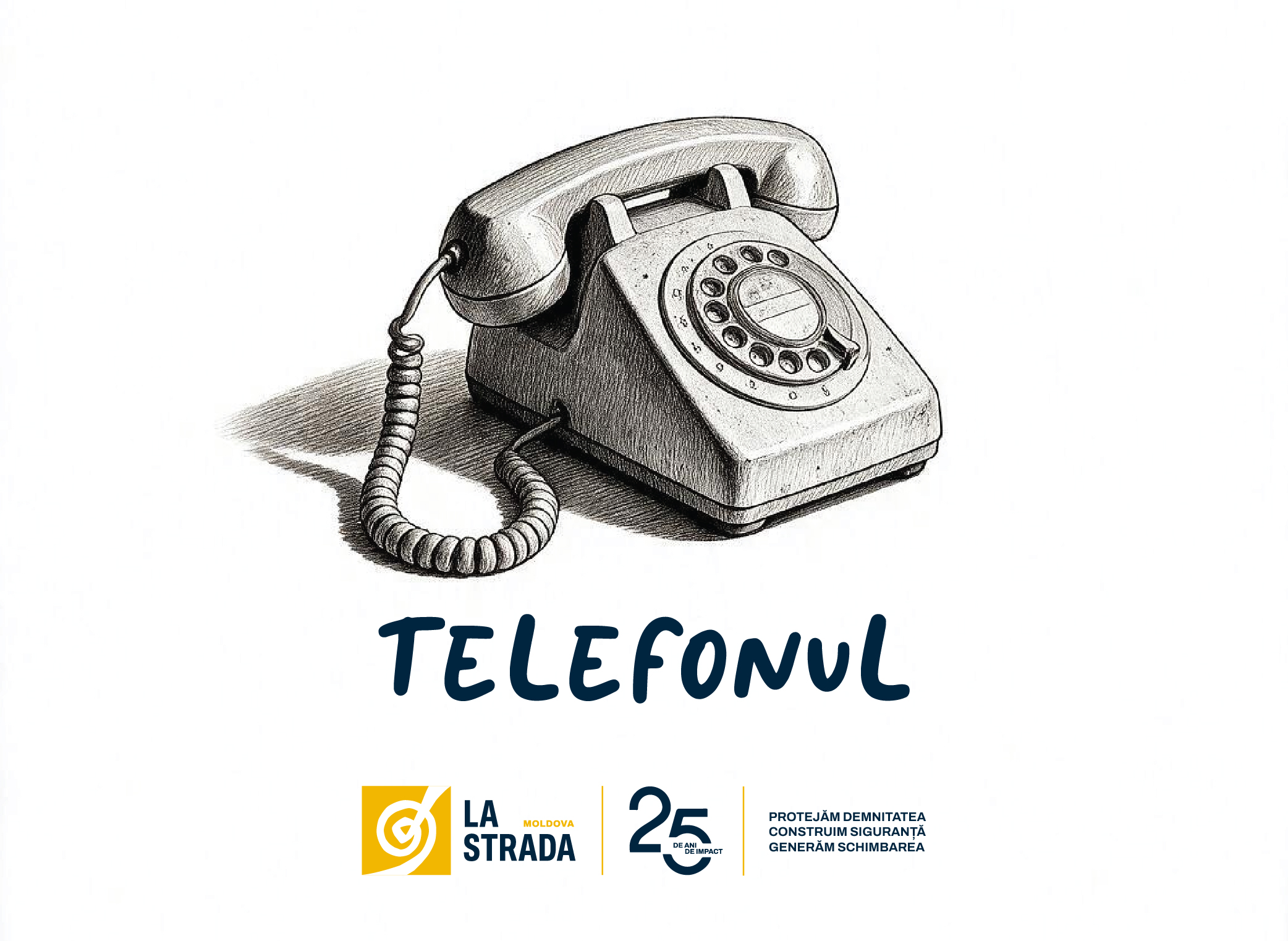
At first glance, it may not seem like much. It is a corded telephone, the kind you might still see in old offices, in films or, if you are lucky, at your grandparents’ house. It has no touchscreen, takes no photographs, does not count the number of steps you have taken in a day, and cannot do all the things we have grown accustomed to asking our phones to do. It simply rings when someone on the other end of the line has something to say.
For us, this telephone was the first point of contact with people who needed help at some of the most difficult moments of their lives. Every time it rang, we knew that somewhere — in the country or abroad, somewhere behind the walls of a home, in a bathroom, at the end of a street, in a stairwell, under a blanket or at a railway station — there was someone who needed us right then.
In the early mornings, when the city was only beginning to wake up; on late, chilly nights; on holidays, when our own families were gathered around the festive table; during the pandemic, when the world seemed to have come to a standstill; on days when everything seemed to change from one hour to the next; and in all those moments that were never written down anywhere and that perhaps no one will ever know about... the telephone rang.
People needed to put their lives back together, to regain their sense of safety and to no longer have to live with suffering, whatever form it might take.
Some calls lasted only a few minutes. Others began in the evening and ended only in the morning. Sometimes, that was all callers needed: to tell their story to the very end, to cry, to pause, to gather their thoughts and find the courage to take the next step, knowing that they were not alone and that someone was there for them. This telephone also came to know the voices and emotions of people who called again after several years. For some callers, life had moved forward, only to bring them back to a point where they no longer knew what to do. We know that this is trust. When things become complicated, people know where they can turn — and that someone will still be there for them.
But the hardest part is always at the other end of the line, when a victim picks up the phone and tells a stranger things they may not have had the courage to tell even those closest to them. To admit that a choice they made did not turn out the way they had imagined. To say that they no longer know what to do. That they are afraid. That they do not know whether they can go on. That they want to leave. Or simply that they need someone to tell them what they can do next. For the people we support, this telephone has been, for many years, a test of courage. It has heard and felt an extraordinary amount of courage. So much courage.
When the Anti-Trafficking Hotline was launched by La Strada, human trafficking was something people spoke about in whispers — or not at all. For many women, calling the Hotline was the first moment when they dared to say out loud what was happening to them. Sometimes, it was the first time anyone had listened to them. Over the years, this telephone has witnessed thousands of stories of courage: the courage of a woman who decided to call us after years of suffering; the courage of a counsellor who remained calm while someone on the other end of the line desperately searched for a way out and could no longer see a way forward because of their suffering; and the courage of an entire team that understood that change sometimes begins with a simple: “Hello, how can we help you?” Twenty-five years later, telephones have changed almost completely. Cords have disappeared, handsets have slipped into our pockets, and calls have been joined by online messages and other forms of communication.
But the essence remains the same: every call is an act of trust. And every response from us is a promise that no one should have to face violence, exploitation or abuse alone.
After 25 years, the telephone still rings — and we continue to answer. For La Strada, the telephone remains a symbol of an idea that has stayed unchanged for a quarter of a century: sometimes, a life can change in the very moment someone answers the phone when you need them and tells you: “It’s not your fault.” Over 25 years of work, the Safe Migration and Anti-Trafficking Hotline (0 800 77777) has become one of the most important sources of support for people affected by human trafficking and for those seeking information about safe migration.
For 25 years, this telephone has carried out its mission with great responsibility. 266,828 times.
That is how many calls have been received through the Safe Migration and Anti-Trafficking Hotline (0 800 77777). The calls kept coming. Sometimes, one handset was simply not enough. So we began answering several phones at the same time. And as people’s needs evolved, so did our services.
In 2009, we launched the Women and Girls’ Trust Line — the first and only specialised service of its kind in the Republic of Moldova dedicated to victims of domestic violence.
Today, almost 17 years later and after more than 33,520 calls, the telephone continues to ring. Women and girls call us when they are experiencing domestic violence, abuse, sexual exploitation or digital violence.
Behind these hundreds of thousands of calls are people who, one day, gathered all their courage and said: “Hello... I need help.”
And on the other end of the line, our people answered.That is what we have been doing for 25 years. We answer.
266,828 calls received through the Safe Migration and Anti-Trafficking Hotline (0 800 77777).
33,520 calls received by the Women and Girls’ Trust Line (0 8008 8008).
7,707 calls providing assistance to presumed victims of human trafficking.
11,659 women, victims of domestic and sexual violence, received counselling through the service.