0
years of activity
0
victims of abuse, assisted by "La Strada" specialists
0
beneficiaries of support and counseling
0
research, studies and public policy analysis
0
professionals trained annually
Media
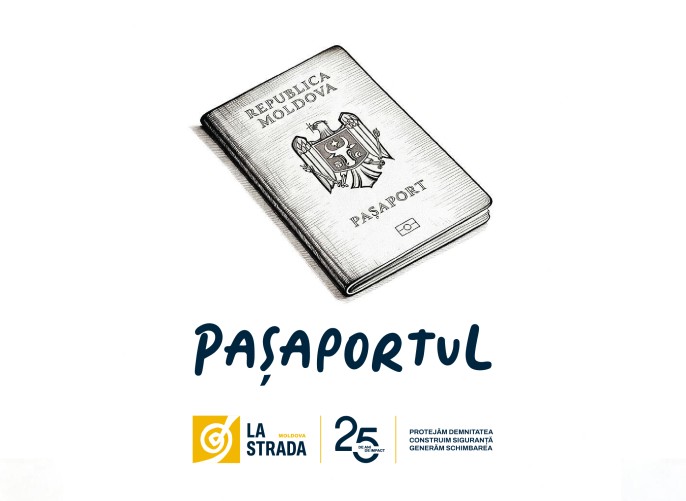
Stories behind the change ┃ The Passport
THE PASSPORT ┃ It crossed borders with people's hopes, then returned home with them, where it was safer... A passport is usually a good thing.You take it out of the drawer when you are about to go some-where. You check it a few times before your trip, so that you don't forget it at home or to check if it hasn't already expired. You keep it in your pocket, in your bag or in a safe place and most of the time, you associate it with something that is about to start: a trip, a job opportunity, a visit to relatives, a vacation or maybe even a better life abroad.For thousands of Moldovans, especially after the 2000s, the passport meant exactly that: the hope that somewhere, across the border, a new opportunity awaits them. But for some, the same cherry red cover was the beginning of an entirely differ-ent story, because a passport can open up the world, but once in the wrong hands, it can do just the opposite."La Strada" has known, over the years, countless stories in which a simple passport was no longer proof of someone's identity, but a tool through which someone else controlled someone's life. Built around it, were fake promises, scams, sophisticated forms of exploitation and journeys that did not lead to where people thought they would. Sometimes, it was confiscated immediately after crossing the border and used as a tool of control: without papers, the victim was no longer free to leave, to ask for help or even to prove who she was.On the surface, a passport is just a piece of paper. In reality however, it means a person. A young woman who wanted a job. A man who wanted to support his family. A mother who hoped that by leaving for a while, she could give her children a better future. People who before leaving, collected a few clothes, said goodbye to their loved ones and started off with the hope that things would be better.For all of them, the passport was the freedom to leave and the assurance that no matter how far the journey will take them, there is always a way back. For 25 years, "La Strada" has been striving to make sure that there is this way back. A road back to safety. To their loved ones. Towards freedom. Towards one's own life. Over the past two and a half decades, "La Strada" has helped hundreds of thousands of people make informed decisions about migration and exercise their right to safe migration, helping to prevent human trafficking and labor exploitation.To be able to go anywhere with hope and full of dreams. To arrive safely. To return free. This is what we believe in and what we fight for, day after day. 217.540 calls were related to advice on safe migration. 33.786 young people participated in seminars to promote safe migration. 21.639 nationals of the Republic of Moldova were legally employed abroad with the support of “La Strada”. 120.000+ visitors annually to the information portal www.migratiesigura.md.
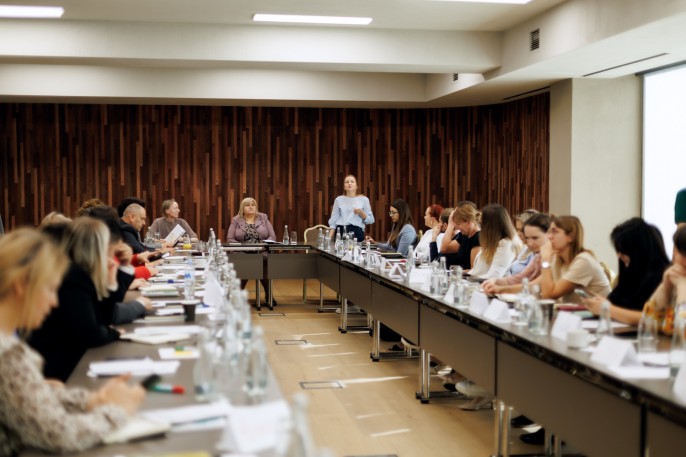
Professionals from various fields trained as trainers in coordinated responses to cases of sexual violence.
An effective response to cases of sexual violence requires not only investigating the offence, but also a trauma-informed intervention that respects the victim’s rights and ensures cooperation among the professionals involved. This was the objective of the “Integrated Response and Multidisciplinary Team Intervention in Cases of Sexual Violence against Adult Victims” Training of Trainers, held today in Chișinău. The training brought together around 40 professionals from different fields and aimed to develop a shared set of competencies that would subsequently enable participants to disseminate knowledge and good practices among local-level specialists responding to cases of sexual violence. The programme addressed the legal, psychological and forensic-medical dimensions of intervention, with a particular focus on the need for a coordinated response among the institutions involved. Speaking at the event, Galina Nița, Acting Head of the Professional Training and Methodological Support Division within the National Agency for Preventing and Combating Violence against Women and Domestic Violence, noted that the participants were attending the second training session and would subsequently train local multidisciplinary teams. This cascade approach will contribute to transferring knowledge to approximately 7,000 specialists across the country who are on the frontline of contact with victims. “Through this cascading mechanism, the training aims to strengthen, at national level, a common, coordinated and victim-centred response,” said Galina Nița. Eugenia Berzan, Sexual and Reproductive Health (SRH) Programme Analyst at the United Nations Population Fund (UNFPA) in Moldova, stressed that sexual violence is one of the most serious forms of human rights violation, while the associated risks and vulnerabilities are exacerbated during times of crisis. “The first 72 hours are crucial when responding to a victim of sexual violence. Some of the consequences of this traumatic experience can be prevented or reduced if the person receives timely access to the support and services they need. That is why frontline professionals need to know how to act promptly, appropriately and in a way that protects the victim. UNFPA Moldova supports the capacity-building of these professionals so that every person affected by sexual violence can receive a coordinated response from the very first hours after the incident occurs or is disclosed,” said Eugenia Berzan. Cristina Deliu, Programme Director at the International Centre “La Strada”, highlighted the sensitive and complex nature of sexual violence cases, as well as the importance of a professional response from the very first contact between a victim and the support system. “Every day, the Women and Girls’ Trust Line 0 8008 8008 receives calls from women experiencing different forms of violence, and our team also provides support and assistance to victims of sexual violence. From this experience, we know how important it is for a woman seeking help to encounter a professional who knows how to listen to her, believe her and guide her appropriately to the next steps. We hope that this training will also become a platform for communication and cooperation among professionals. Specialists at the local level should be among the first people a victim can turn to with confidence and receive a prompt, competent response, without being judged or re-traumatised.” Throughout the day, participants discussed victims’ rights and safeguards, the effects of trauma and trauma-response mechanisms, as well as the myths and prejudices that can influence perceptions of sexual violence and the way a case is handled. An important component of the training focused on developing trauma-informed communication and interviewing skills. Professionals were trained to recognise the psychological, emotional and physical effects of traumatic experiences and to adapt their communication to the condition and needs of the person seeking help. The training also included a session dedicated to consent to sexual activity. Participants explored the differences between a culture of consent and rape culture and discussed the myths and prejudices that can influence the understanding of consent and the assessment of situations involving sexual violence. Another key component of the programme was multidisciplinary cooperation. In managing a case of sexual violence, different professionals may be involved at different stages, including police officers, prosecutors, doctors, forensic specialists, psychologists and support service providers. The training addressed victims’ entry points into the system, cooperation among professionals, the collection and management of forensic evidence, as well as referral mechanisms to specialised services. The training also covered the relevant national legal framework, including provisions of the Criminal Code, Code of Criminal Procedure, the Standardised Clinical Protocol “Clinical Management of Rape Cases”, and other relevant legal and regulatory instruments. This activity was organised by the National Agency for Preventing and Combating Violence against Women and Domestic Violence under the National Training and Specialisation Programme for Professionals in the Field of Preventing and Combating Violence against Women and Domestic Violence, in partnership with the United Nations Population Fund (UNFPA) in Moldova and UNICEF, within the joint programme “Breaking the Cycle of Violence against Women and Children”, implemented by the International Centre “La Strada” with financial support from the Government of the United Kingdom.
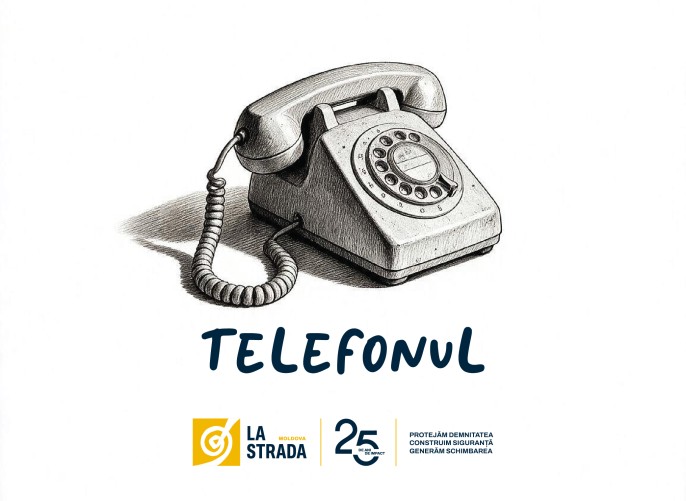
Stories behind the change ┃ The Phone
At first glance, it may not seem like much. It is a corded telephone, the kind you might still see in old offices, in films or, if you are lucky, at your grandparents’ house. It has no touchscreen, takes no photographs, does not count the number of steps you have taken in a day, and cannot do all the things we have grown accustomed to asking our phones to do. It simply rings when someone on the other end of the line has something to say. For us, this telephone was the first point of contact with people who needed help at some of the most difficult moments of their lives. Every time it rang, we knew that somewhere — in the country or abroad, somewhere behind the walls of a home, in a bathroom, at the end of a street, in a stairwell, under a blanket or at a railway station — there was someone who needed us right then. In the early mornings, when the city was only beginning to wake up; on late, chilly nights; on holidays, when our own families were gathered around the festive table; during the pandemic, when the world seemed to have come to a standstill; on days when everything seemed to change from one hour to the next; and in all those moments that were never written down anywhere and that perhaps no one will ever know about... the telephone rang. People needed to put their lives back together, to regain their sense of safety and to no longer have to live with suffering, whatever form it might take. Some calls lasted only a few minutes. Others began in the evening and ended only in the morning. Sometimes, that was all callers needed: to tell their story to the very end, to cry, to pause, to gather their thoughts and find the courage to take the next step, knowing that they were not alone and that someone was there for them. This telephone also came to know the voices and emotions of people who called again after several years. For some callers, life had moved forward, only to bring them back to a point where they no longer knew what to do. We know that this is trust. When things become complicated, people know where they can turn — and that someone will still be there for them. But the hardest part is always at the other end of the line, when a victim picks up the phone and tells a stranger things they may not have had the courage to tell even those closest to them. To admit that a choice they made did not turn out the way they had imagined. To say that they no longer know what to do. That they are afraid. That they do not know whether they can go on. That they want to leave. Or simply that they need someone to tell them what they can do next. For the people we support, this telephone has been, for many years, a test of courage. It has heard and felt an extraordinary amount of courage. So much courage. When the Anti-Trafficking Hotline was launched by La Strada, human trafficking was something people spoke about in whispers — or not at all. For many women, calling the Hotline was the first moment when they dared to say out loud what was happening to them. Sometimes, it was the first time anyone had listened to them. Over the years, this telephone has witnessed thousands of stories of courage: the courage of a woman who decided to call us after years of suffering; the courage of a counsellor who remained calm while someone on the other end of the line desperately searched for a way out and could no longer see a way forward because of their suffering; and the courage of an entire team that understood that change sometimes begins with a simple: “Hello, how can we help you?” Twenty-five years later, telephones have changed almost completely. Cords have disappeared, handsets have slipped into our pockets, and calls have been joined by online messages and other forms of communication. But the essence remains the same: every call is an act of trust. And every response from us is a promise that no one should have to face violence, exploitation or abuse alone. After 25 years, the telephone still rings — and we continue to answer. For La Strada, the telephone remains a symbol of an idea that has stayed unchanged for a quarter of a century: sometimes, a life can change in the very moment someone answers the phone when you need them and tells you: “It’s not your fault.” Over 25 years of work, the Safe Migration and Anti-Trafficking Hotline (0 800 77777) has become one of the most important sources of support for people affected by human trafficking and for those seeking information about safe migration. For 25 years, this telephone has carried out its mission with great responsibility. 266,828 times. That is how many calls have been received through the Safe Migration and Anti-Trafficking Hotline (0 800 77777). The calls kept coming. Sometimes, one handset was simply not enough. So we began answering several phones at the same time. And as people’s needs evolved, so did our services. In 2009, we launched the Women and Girls’ Trust Line — the first and only specialised service of its kind in the Republic of Moldova dedicated to victims of domestic violence. Today, almost 17 years later and after more than 33,520 calls, the telephone continues to ring. Women and girls call us when they are experiencing domestic violence, abuse, sexual exploitation or digital violence. Behind these hundreds of thousands of calls are people who, one day, gathered all their courage and said: “Hello... I need help.” And on the other end of the line, our people answered.That is what we have been doing for 25 years. We answer. 266,828 calls received through the Safe Migration and Anti-Trafficking Hotline (0 800 77777). 33,520 calls received by the Women and Girls’ Trust Line (0 8008 8008). 7,707 calls providing assistance to presumed victims of human trafficking. 11,659 women, victims of domestic and sexual violence, received counselling through the service.
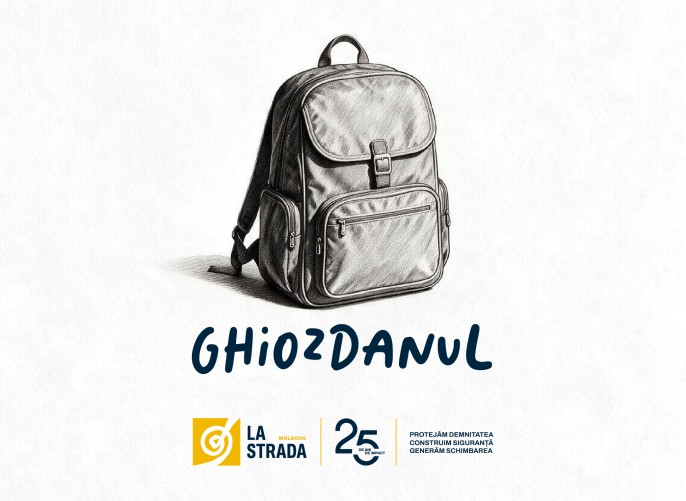
Stories Behind the Change ┃ The Schoolbag
THE SCHOOLBAG ┃ We slipped a little digital safety into it — for safer experiences online. School mornings have almost always followed the same routine: the schoolbag ready, notebooks carefully arranged alongside the textbooks, the pencil case tossed somewhere in between and, sometimes, a sandwich or an apple that you would only discover during the long break. You would put the bag on your back and head off, without giving much thought to all the things you were carrying with you. We, adults, often say that the future is carried in children’s schoolbags. And every morning, hundreds of thousands of children across Moldova put their schoolbags on their backs and head to school. In recent years, however, they have started taking a phone, a tablet or a laptop along with them, too. The world in which they discover, learn and explore no longer stops at the classroom or the school gate. It continues online. The internet offers children a world full of opportunities, but it also exposes them to a range of risks. And “La Strada” knows all too well what those risks can mean. In recent years, protecting children has meant much more than teaching them to be careful about who they communicate with online or not to talk to strangers. It has meant helping them understand more deeply the world they can enter with a single click; helping them recognize where a joke ends and humiliation begins, where friendship ends and manipulation begins and, above all, making sure they know that they are allowed to say “no,” ask for help and speak up whenever something makes them feel unsafe. “La Strada” has chosen to reach children before they need help. In classrooms, at workshops, through conversations with teachers and parents, at summer camps and national events, and through thematic lessons, games, campaigns and educational resources, we have talked about things that do not always appear in school textbooks, but that can help children navigate a world that changes from one generation to the next at an extraordinary pace. Over the 25 years of “La Strada”, thousands of schoolbags have made their way into schools, carrying conversations about respect, boundaries, trust, safety and responsibility. Some children may not remember every lesson. But they will remember that there is an adult they can turn to for help. That they never have to send a photo they do not want to share. That no one has the right to humiliate them, online or offline. That if something upsetting happens to them online, it is never their fault. Looking back at all the children across the country whom we have reached and engaged with, we can say that the most valuable things a child can carry in their schoolbag are not books, but the confidence and ability to make safe choices that protect them. Over 25 years of work, “La Strada” has contributed to raising generations of children who are better informed, more confident and better prepared to know and protect their rights — including in the digital world. 10,000+ children and adolescents have participated in educational activities focused on online safety and healthy relationships. 1,000+ schools have implemented thematic activities using educational resources developed by “La Strada”. 6,000+ teachers have been trained to prevent and identify situations of abuse and exploitation. 100+ educational resources (guides, lessons, games and video materials) have been developed for children, parents and teachers.